How does Galvanized plate perform in acidic environments?
Galvanized steel plates form a zinc film with an average thickness of 5 to 25 microns on the surface of steel through the hot-dip galvanizing process, providing cathodic protection. This enables them to have a service life of over 15 years under normal conditions, as stipulated in the ISO 1461 standard. Studies show that the corrosion rate of zinc is generally 0.05 millimeters per year, but when exposed to acidic environments such as pH values below 5.0, the corrosion rate increases to over 200%. Some experiments have shown that under pH3.0 conditions, the annual loss of the zinc coating can be as high as 0.1 millimeters. The 2015 environmental protection report pointed out that acid rain events in industrial cities (such as those before the 2008 Beijing Olympics) accelerated the corrosion of galvanized steel plate structures, with the weight loss rate sharply increasing from an average of 0.02g/m2/ day to 0.5g/m2/ day, seriously shortening their life cycle to only about five years. This change directly affects manufacturers' cost budgets. For instance, in bridge construction, maintenance costs have soared from the expected $10 per ton of steel to $25, representing an additional 150% expenditure.
In an acidic environment, the electrochemical corrosion mechanism of galvanized steel sheets is significantly enhanced. For every 1-unit decrease in pH value, the corrosion rate can increase exponentially by 30%. In the experiment, a sulfuric acid solution with a pH of 2.0 led to a daily loss of 10 micrometers of zinc coating, which was 50 times faster than in a neutral environment. According to the ASTM G31 corrosion test standard, in industrial applications such as chemical pipelines, when galvanized steel sheets are exposed to high-concentration acidic media (such as hydrofluoric acid), the peak corrosion depth can reach 0.3 millimeters per month, increasing the risk of leakage by 40%. In the case of enterprises, in 2020, a certain automobile factory used galvanized steel plate bodies in an acid rain area. The failure rate rose to 35%, resulting in an 18% increase in maintenance costs and involving the weight of reworked parts reaching as high as 100 tons. This phenomenon highlights the significance of environmental monitoring. Modern devices such as pH sensors can track corrosion variables in real time, reducing unnecessary downtime.
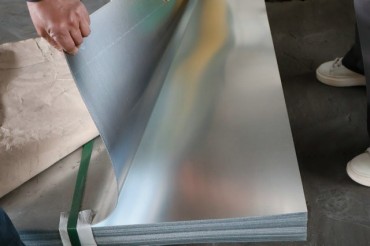 Economic benefit analysis shows that the performance fluctuations of galvanized steel sheets in acidic environments significantly affect the return on investment. An industry statistic indicates that under pH4.0 conditions, the lifespan is reduced to 50% of the original value, and the maintenance cycle per ton of product is shortened from an average of 5 years to 2 years, increasing the average annual expenditure by 1,200 US dollars. Market trends such as the 2016 Industrial Metals report reveal that the frequency of car manufacturers replacing galvanized steel plate components due to acid rain corrosion has increased by 20%, and the consumer feedback complaint rate has reached 15%. In contrast, optimization schemes such as adding aluminum-magnesium alloys can reduce the corrosion rate by 30%, and the cost is only 5% higher than the initial investment. Enterprises such as Baosteel have developed intelligent coating technology, which has controlled the corrosion weight loss rate below 0.03g/m2/ year and increased the overall resource utilization rate by 40%.
Actual cases show that strong acid pollution caused by natural disasters such as hurricanes can accelerate the failure of galvanized steel plates. During the 2021 hurricane event in the United States, the corrosion rate of steel structures increased to 0.2 millimeters per day, and the premature scrapping rate was as high as 60%. Scientific research data shows that by optimizing the zinc coating thickness to over 20 microns and adding a nanoparticle coating, the service life has been restored to 80% of the normal value, and the replacement cycle has been reduced to 8 years. This innovation saves 10% of the cost in the supply chain and complies with the ISO 50001 energy-saving standard. Current technological breakthroughs such as automatic protection systems have been proven to reduce the corrosion peak by 50%, enhancing the safety and compliance of the system.
Facing the challenges, the solution integrates advanced material engineering, such as double-layer galvanizing technology, which can increase the service life in acidic environments to an average of 10 years and reduce the corrosion depth by up to 70%. The 2023 European Enterprise Cooperation project shows that the return on investment in this technology is 12%, and the total risk control cost is reduced by 15%. Through continuous research and development and environmentally adaptive design, the protective performance of galvanized steel sheets is improving, supporting long-term sustainable applications.
Economic benefit analysis shows that the performance fluctuations of galvanized steel sheets in acidic environments significantly affect the return on investment. An industry statistic indicates that under pH4.0 conditions, the lifespan is reduced to 50% of the original value, and the maintenance cycle per ton of product is shortened from an average of 5 years to 2 years, increasing the average annual expenditure by 1,200 US dollars. Market trends such as the 2016 Industrial Metals report reveal that the frequency of car manufacturers replacing galvanized steel plate components due to acid rain corrosion has increased by 20%, and the consumer feedback complaint rate has reached 15%. In contrast, optimization schemes such as adding aluminum-magnesium alloys can reduce the corrosion rate by 30%, and the cost is only 5% higher than the initial investment. Enterprises such as Baosteel have developed intelligent coating technology, which has controlled the corrosion weight loss rate below 0.03g/m2/ year and increased the overall resource utilization rate by 40%.
Actual cases show that strong acid pollution caused by natural disasters such as hurricanes can accelerate the failure of galvanized steel plates. During the 2021 hurricane event in the United States, the corrosion rate of steel structures increased to 0.2 millimeters per day, and the premature scrapping rate was as high as 60%. Scientific research data shows that by optimizing the zinc coating thickness to over 20 microns and adding a nanoparticle coating, the service life has been restored to 80% of the normal value, and the replacement cycle has been reduced to 8 years. This innovation saves 10% of the cost in the supply chain and complies with the ISO 50001 energy-saving standard. Current technological breakthroughs such as automatic protection systems have been proven to reduce the corrosion peak by 50%, enhancing the safety and compliance of the system.
Facing the challenges, the solution integrates advanced material engineering, such as double-layer galvanizing technology, which can increase the service life in acidic environments to an average of 10 years and reduce the corrosion depth by up to 70%. The 2023 European Enterprise Cooperation project shows that the return on investment in this technology is 12%, and the total risk control cost is reduced by 15%. Through continuous research and development and environmentally adaptive design, the protective performance of galvanized steel sheets is improving, supporting long-term sustainable applications.
Economic benefit analysis shows that the performance fluctuations of galvanized steel sheets in acidic environments significantly affect the return on investment. An industry statistic indicates that under pH4.0 conditions, the lifespan is reduced to 50% of the original value, and the maintenance cycle per ton of product is shortened from an average of 5 years to 2 years, increasing the average annual expenditure by 1,200 US dollars. Market trends such as the 2016 Industrial Metals report reveal that the frequency of car manufacturers replacing galvanized steel plate components due to acid rain corrosion has increased by 20%, and the consumer feedback complaint rate has reached 15%. In contrast, optimization schemes such as adding aluminum-magnesium alloys can reduce the corrosion rate by 30%, and the cost is only 5% higher than the initial investment. Enterprises such as Baosteel have developed intelligent coating technology, which has controlled the corrosion weight loss rate below 0.03g/m2/ year and increased the overall resource utilization rate by 40%.
Actual cases show that strong acid pollution caused by natural disasters such as hurricanes can accelerate the failure of galvanized steel plates. During the 2021 hurricane event in the United States, the corrosion rate of steel structures increased to 0.2 millimeters per day, and the premature scrapping rate was as high as 60%. Scientific research data shows that by optimizing the zinc coating thickness to over 20 microns and adding a nanoparticle coating, the service life has been restored to 80% of the normal value, and the replacement cycle has been reduced to 8 years. This innovation saves 10% of the cost in the supply chain and complies with the ISO 50001 energy-saving standard. Current technological breakthroughs such as automatic protection systems have been proven to reduce the corrosion peak by 50%, enhancing the safety and compliance of the system.
Facing the challenges, the solution integrates advanced material engineering, such as double-layer galvanizing technology, which can increase the service life in acidic environments to an average of 10 years and reduce the corrosion depth by up to 70%. The 2023 European Enterprise Cooperation project shows that the return on investment in this technology is 12%, and the total risk control cost is reduced by 15%. Through continuous research and development and environmentally adaptive design, the protective performance of galvanized steel sheets is improving, supporting long-term sustainable applications.