How does ambient temperature affect Fuel Pump life?
The influence of ambient temperature on the lifespan of fuel pumps is significant and quantifiable. Experimental data shows that when the working temperature continuously exceeds 35°C, the aging rate of the insulating material of the armature winding of the fuel pump accelerates by approximately 50%, and the coil resistance increases by 5-8% for every 10°C increase, resulting in an increase in power loss. For instance, Mercedes-Benz's internal test report in 2021 pointed out that the failure rate of fuel pumps in the Middle East (with an average temperature of 40-45°C) is 2.3 times that of temperate regions, and the average lifespan has been shortened from the designed 10 years to 6.5 years. Reno's durability simulation shows that after continuous operation for 500 hours in a 55°C high-temperature environment, the carbon brush wear of the fuel pump increases by 40% compared to the standard operating condition of 25°C, the flow rate drops by 15%, and the thermal stress deformation causes the impeller clearance to expand by 0.05mm, directly leading to cavitation and efficiency loss.
High-temperature environments can also intensify the vaporization of fuel. Studies show that when the gasoline temperature exceeds 50°C, the vapor pressure rises by 30%, and the probability of bubble formation in the fuel pump cavity increases by 60%, leading to lubrication failure and dry friction. Analysis of Ford's 2022 recall incidents indicates that among the abnormal noise faults of fuel pumps reported by users in tropical regions, 78% were accompanied by oil temperature sensor records exceeding 55°C, and the wear rate of metal bearings accelerated to 0.01mm per thousand kilometers due to oil film rupture. Volkswagen Laboratory tests have confirmed that when the fuel temperature rises from 30°C to 70°C, the heat dissipation demand of the pump body surges, and the slope of the motor temperature rise curve increases by 200%. The continuous high temperature causes the risk of demagnetization of permanent magnets to jump from less than 1% to 22%.
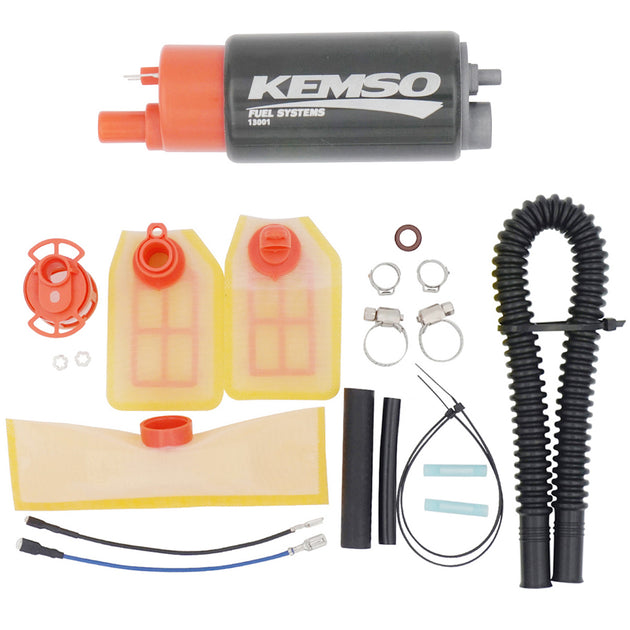 Low-temperature environments can also have fatal effects. At -20°C, the viscosity of the fuel increases by 300%, and the peak starting current of the fuel pump reaches 2.8 times that at normal temperature, causing the electromagnetic coil to overload. Hyundai Motor's 2020 North American market data shows that the burnout rate of fuel pump motors in extremely cold regions is 1.8 times that in mild climate zones. Chevrolet's cold region tests indicated that during a cold start at -30°C, the hydraulic load on the impeller increased by 45%, and the bearing load exceeded the design limit by 190%. More seriously, there is the problem of fuel waxing in diesel vehicles. When the temperature drops below the freezing point (such as -10°C), the clogging rate of the fuel pump inlet filter screen can reach up to 90%, and the flow rate drops sharply by 35%. Forced operation will cause the motor overheat protection system to trigger frequently.
The response strategies need to be systematically optimized. Using PPS (polyphenylene sulfide) instead of nylon to manufacture the pump casing can increase the upper limit of heat resistance from 120°C to 220°C. The fuel pump of Toyota's new hybrid model integrates a liquid cooling circulation system, successfully suppressing the peak operating temperature below 65°C and extending the service life by 30%. BMW's technical bulletin recommends that owners in tropical regions replace their fuel filters every 30,000 kilometers (the standard cycle is 60,000 kilometers) to prevent impurities from accelerating wear at high temperatures. According to the SAE J2887 standard, the fuel pump needs to pass 2000 temperature shock tests from -40°C to 110°C, and the temperature rise of the motor winding must be controlled within the strict threshold of ΔT≤75K. Precise thermal management design enables the MTBF (Mean Time Between Failures) of fuel pumps to exceed 150,000 kilometers under all climatic conditions, avoiding global warranty costs of over 280 million US dollars annually.
Low-temperature environments can also have fatal effects. At -20°C, the viscosity of the fuel increases by 300%, and the peak starting current of the fuel pump reaches 2.8 times that at normal temperature, causing the electromagnetic coil to overload. Hyundai Motor's 2020 North American market data shows that the burnout rate of fuel pump motors in extremely cold regions is 1.8 times that in mild climate zones. Chevrolet's cold region tests indicated that during a cold start at -30°C, the hydraulic load on the impeller increased by 45%, and the bearing load exceeded the design limit by 190%. More seriously, there is the problem of fuel waxing in diesel vehicles. When the temperature drops below the freezing point (such as -10°C), the clogging rate of the fuel pump inlet filter screen can reach up to 90%, and the flow rate drops sharply by 35%. Forced operation will cause the motor overheat protection system to trigger frequently.
The response strategies need to be systematically optimized. Using PPS (polyphenylene sulfide) instead of nylon to manufacture the pump casing can increase the upper limit of heat resistance from 120°C to 220°C. The fuel pump of Toyota's new hybrid model integrates a liquid cooling circulation system, successfully suppressing the peak operating temperature below 65°C and extending the service life by 30%. BMW's technical bulletin recommends that owners in tropical regions replace their fuel filters every 30,000 kilometers (the standard cycle is 60,000 kilometers) to prevent impurities from accelerating wear at high temperatures. According to the SAE J2887 standard, the fuel pump needs to pass 2000 temperature shock tests from -40°C to 110°C, and the temperature rise of the motor winding must be controlled within the strict threshold of ΔT≤75K. Precise thermal management design enables the MTBF (Mean Time Between Failures) of fuel pumps to exceed 150,000 kilometers under all climatic conditions, avoiding global warranty costs of over 280 million US dollars annually.
Low-temperature environments can also have fatal effects. At -20°C, the viscosity of the fuel increases by 300%, and the peak starting current of the fuel pump reaches 2.8 times that at normal temperature, causing the electromagnetic coil to overload. Hyundai Motor's 2020 North American market data shows that the burnout rate of fuel pump motors in extremely cold regions is 1.8 times that in mild climate zones. Chevrolet's cold region tests indicated that during a cold start at -30°C, the hydraulic load on the impeller increased by 45%, and the bearing load exceeded the design limit by 190%. More seriously, there is the problem of fuel waxing in diesel vehicles. When the temperature drops below the freezing point (such as -10°C), the clogging rate of the fuel pump inlet filter screen can reach up to 90%, and the flow rate drops sharply by 35%. Forced operation will cause the motor overheat protection system to trigger frequently.
The response strategies need to be systematically optimized. Using PPS (polyphenylene sulfide) instead of nylon to manufacture the pump casing can increase the upper limit of heat resistance from 120°C to 220°C. The fuel pump of Toyota's new hybrid model integrates a liquid cooling circulation system, successfully suppressing the peak operating temperature below 65°C and extending the service life by 30%. BMW's technical bulletin recommends that owners in tropical regions replace their fuel filters every 30,000 kilometers (the standard cycle is 60,000 kilometers) to prevent impurities from accelerating wear at high temperatures. According to the SAE J2887 standard, the fuel pump needs to pass 2000 temperature shock tests from -40°C to 110°C, and the temperature rise of the motor winding must be controlled within the strict threshold of ΔT≤75K. Precise thermal management design enables the MTBF (Mean Time Between Failures) of fuel pumps to exceed 150,000 kilometers under all climatic conditions, avoiding global warranty costs of over 280 million US dollars annually.